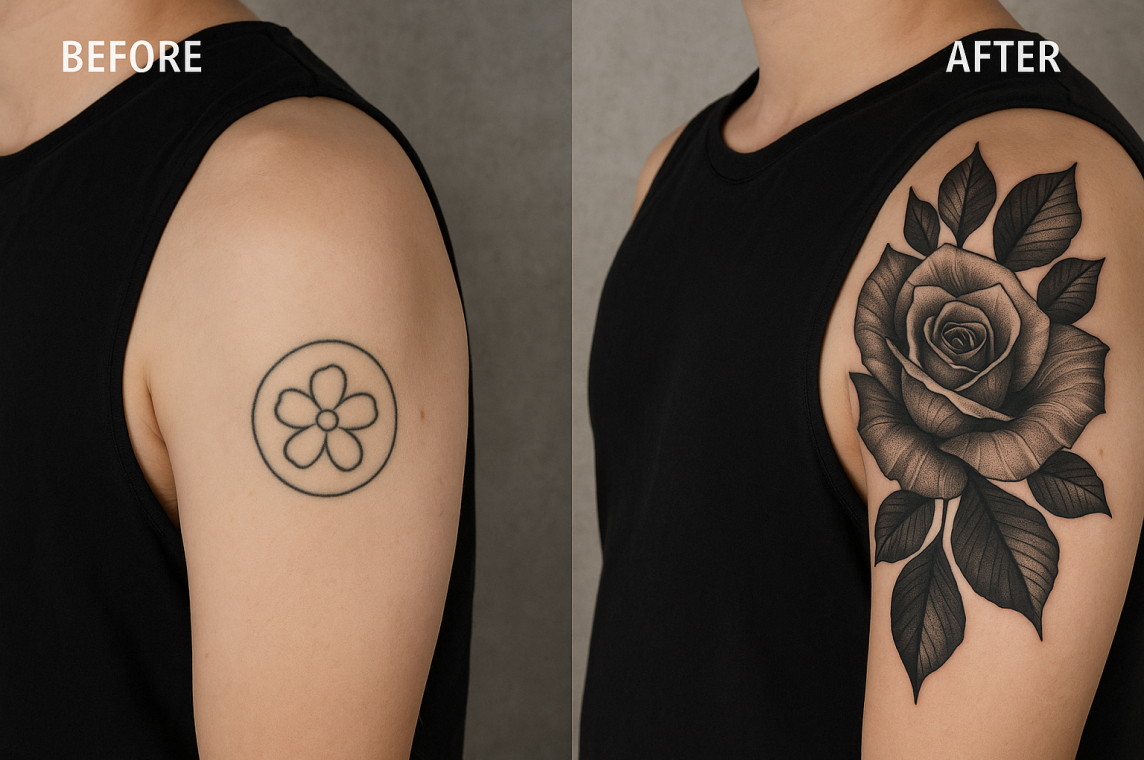
In addition to the fact that tattoos are permanently inscribed on the body, they are also a form of body painting. And body painting is a fundamentally human need that was already in vogue among Stone Age people. They used earth colors to paint themselves - the tattoo needle had simply not yet been invented. It was only much later that more and more attempts were made to permanently affix and integrate body painting on and in the body. During his stay on Easter Island in 1934, Alfred Métraux studied the local Rapa Nui people. He talks about their special relationship to "body jewelry": the Rapa Nui defined their interest in their own appearance more through tattoos than clothing.
There were people there who specialized in "tattooing". Using a hook made of bone, which they dipped in pigment beforehand, the color was tapped into the skin with a hammer. The pigments came from the charcoal of branches and the admixture of berry juice from the "black nightshade", a very poisonous plant. TOP
The whole process was very lengthy and took years. The "tattooing" was started at the age of 8. The sessions were extremely painful and dangerous. The tattoos thus remained unfinished for some of the "Rapa Nui" people.

Nowadays, body painting tends to follow lustful motifs. The body is an object of desire, of life and of confrontation with its environment. Since the hippie movement, we have returned to an intense engagement with the body; we paint ourselves when we dress up (body painting), when we protest (Femen), and when we want to be mystical and sexy (swingers club?). And for a better complexion, we apply a healing mud mask. From 99 cents in the drugstore.
A completely different aspect is body painting, which serves the purpose of warfare. Among the Indians, for example, body painting was and is of great importance in times of war. Red color means success in war. The blue color means defeat and difficulties with the enemy.
War paint exists in all cultures around the world. The Germanic tribes often went into battle painted completely black. The strongest effect on the viewer is when the opponent's face is distorted. This is because the individual personality is reflected in the facial expression. Now, painted, tattooed, altered, the face appears strange and frightening. The "Scottish" Picts dyed their faces with woad to give them a fearsome appearance in battle. Caesar reports: "All Britons dyed their faces with woad, which gives them a blue coloration ... and this makes them so terrible to look at in battle".


The face should darken, a new character should appear. A frightening character. One that belongs to a person you have to be wary of. It's psychological warfare that's been done, or rather deliberately applied. Ideally long-lasting, because wars can last longer. That's why tattoos are the best alternative in the event of war. They characterize the long-suffering warrior. Wars have been going on since time immemorial. Disputes over land, honor, hunger for power or different beliefs have always been the cause of armed conflicts. The corresponding tattoos on bodies that have experienced war provide information about this - but also tell of all the suffering that war brings to people.
Dialectically speaking, the war symbols on the skin also point in the opposite direction - in the necessity of peace and overcoming crises.
Tattoos that have war as their theme can also stand as warning symbols, as a way of dealing with pain and conflict. The time of war was terrible, but now it is pacified. The tattoo is a healed scar on my skin. A heavy but necessary tattoo. And one that symbolizes healing. Tattoos about the Second World War, for example, often show the memory of dead comrades or family members. They are a sign of loss and also of a deep aversion to violence. Wars always bring pain and suffering - for both sides. War tattoos are therefore often also a cautionary motif, intended to bring the horror and grief of such events closer to the viewer. The tattoo is a permanent, "living" memorial against violence. Such a tattoo is therefore also one of the deepest and most impressive expressions of the desire for peace.
War may be the "father of all things" (Heraclitus, born 520 BC). But it can be overcome, by daughter and son: every pain, no matter how great, can be symbolically overcome - and better times appear on the horizon.

In addition to the fact that tattoos are permanently inscribed on the body, they are also a form of body painting. And body painting is a fundamentally human need that was already in vogue among Stone Age people. They used earth colors to paint themselves - the tattoo needle had simply not yet been invented. It was only much later that more and more attempts were made to permanently affix and integrate body painting on and in the body. During his stay on Easter Island in 1934, Alfred Métraux studied the local Rapa Nui people. He talks about their special relationship to "body jewelry": the Rapa Nui defined their interest in their own appearance more through tattoos than clothing.
There were people there who specialized in "tattooing". Using a hook made of bone, which they dipped in pigment beforehand, the color was tapped into the skin with a hammer. The pigments came from the charcoal of branches and the admixture of berry juice from the "black nightshade", a very poisonous plant. TOP
The whole process was very lengthy and took years. The "tattooing" was started at the age of 8. The sessions were extremely painful and dangerous. The tattoos thus remained unfinished for some of the "Rapa Nui" people.
Nowadays, body painting tends to follow lustful motifs. The body is an object of desire, of life and of confrontation with its environment. Since the hippie movement, we have returned to an intense engagement with the body; we paint ourselves when we dress up (body painting), when we protest (Femen), and when we want to be mystical and sexy (swingers club?). And for a better complexion, we apply a healing mud mask. From 99 cents in the drugstore.
A completely different aspect is body painting, which serves the purpose of warfare. Among the Indians, for example, body painting was and is of great importance in times of war. Red color means success in war. The blue color means defeat and difficulties with the enemy.
War paint exists in all cultures around the world. The Germanic tribes often went into battle painted completely black. The strongest effect on the viewer is when the opponent's face is distorted. This is because the individual personality is reflected in the facial expression. Now, painted, tattooed, altered, the face appears strange and frightening. The "Scottish" Picts dyed their faces with woad to give them a fearsome appearance in battle. Caesar reports: "All Britons dyed their faces with woad, which gives them a blue coloration ... and this makes them so terrible to look at in battle".
The face should darken, a new character should appear. A frightening character. One that belongs to a person you have to be wary of. It's psychological warfare that's been done, or rather deliberately applied. Ideally long-lasting, because wars can last longer. That's why tattoos are the best alternative in the event of war. They characterize the long-suffering warrior. Wars have been going on since time immemorial. Disputes over land, honor, hunger for power or different beliefs have always been the cause of armed conflicts. The corresponding tattoos on bodies that have experienced war provide information about this - but also tell of all the suffering that war brings to people.
Dialectically speaking, the war symbols on the skin also point in the opposite direction - in the necessity of peace and overcoming crises.
Tattoos that have war as their theme can also stand as warning symbols, as a way of dealing with pain and conflict. The time of war was terrible, but now it is pacified. The tattoo is a healed scar on my skin. A heavy but necessary tattoo. And one that symbolizes healing. Tattoos about the Second World War, for example, often show the memory of dead comrades or family members. They are a sign of loss and also of a deep aversion to violence. Wars always bring pain and suffering - for both sides. War tattoos are therefore often also a cautionary motif, intended to bring the horror and grief of such events closer to the viewer. The tattoo is a permanent, "living" memorial against violence. Such a tattoo is therefore also one of the deepest and most impressive expressions of the desire for peace.
War may be the "father of all things" (Heraclitus, born 520 BC). But it can be overcome, by daughter and son: every pain, no matter how great, can be symbolically overcome - and better times appear on the horizon.
30.06.-02.07. Summer Tattoo Festival No.8
05.08.-06.08. Garda Tattoo Event
18.08.-20.08. Tunjo Tattoo Fest
15.09.-17.09. Millennium Tattoo Show No.6
15.09.-17.09. Cagliari Tattoo Convention No.13
22.09.-24-09. Bergamo Tattoo Expo
22.09.-24-09. Torino Tattoo Convention No.12
29.09.- 01.10. Urban Land Tattoo Expo Roma
29.09.-01.10. Mima Tattoo Convention No.5
13.10.-15.10. Genova Tattoo Convention No.16
14.10.-15.10. Roma Tattoo Expo No.23
20.10.-22-10. Ferrara Tattoo Convention No.5
27.10.-29.10. Passion Art Tattoo Convention Bolzano No.16
04.11.-05.11. Chiuduno Tattoo Weekend
10.11.-12.11. Ancona Tattoo Expo No.2
10.11.-12.11. Palermo Tattoo Convention No.9
11.11.-12.11. Trieste International Tattoo Expo No.14
11.11.-12.11. Catania Tattoo Convention No.5
01.12.-03.12. Florence Tattoo Convention No.13
08.12.-10.12. East Coast Tattoo Convention No.17
16.06.-18.06. Anime Tattoo Expo, Fire de Barcelona
30.06.-02.07.23 Asturias Tattoo Expo No.8
08.09.-10.09. Ibiza Tattoo Convention No.4
15.09.-17.09. Gaia Tattoo Expo No.3
06.10.-08.10. Barcelona Tattoo Expo No.26
27.10.-29.10. Alicante Tattoo Convention No.5
03.11.-05.11. Pamplona Tattoo Expo No.5
08.07.-09.07 . Bristol Tattoo Convention
22.07.-23.07 . Ink And Oil Tattoo Convention
29.07.-30.07. Great Western Tattoo Show
19.08.-20.08. Cornwall’s Tattoo Convention
19.08.-20.08. Tatcon Blackpool
26.08.-27.08. Big London Tattoo Show
16.09.-17.09. Buckley Ink Tattoo Convention
23.09.-24.09. Sheffield Tattoo Festival
30.09.-01.10. Tattoo Trojans Doncaster Tattoo Convention
07.10.-08.10. Locked up Tattoo Convention
14.10.-15.10. Halloween Tattoo Bash
11.11.-12.11. Wrexham Tattoo Show
02.09.-03.09. Tattoonika
14.10.-15.10. Wildstyle & Tattoo Messe Kapfenburg
21.10.-22.10. Wildstyle & Tattoo Messe Linz
28.10.-29.10. Wildstyle & Tattoo Messe Salzburg
01.09.-03.09. Lugano TI – Tattoo Convention No.24
16.06.-18.06. Epinal Tattoo Show
17.06.-18.06. Asian Festival Tattoo Show
01.07.-02.07. Caen Tattoo Show
08.07.-09.07. Rock Tattoo Spirit
15.07.-16.07. Sermaize Tattoo Convention
19.08.-20.08. Deauvile Tattoo Festival
01.09.-03.09. Montauban Tattoo Show
01.09.-03.09. Ink’n’Roll Chateauroux Tattoo Festival
02.09.-03.09. The 70’s Tattoo Show
09.09.-10.09. Jura Ink Park
09.09.-10.09. Dentelle Ink Alençon
09.09.-10.09. Champagne Tattoo Event
09.09.-10.09. Limoges Tattoo Show
15.09.-17.09. Univers Tattoo Convention
16.09.-17.09. Circus Tattoo Show
16.09.-17.09. Kustom Festival & Tattoo
16.09.-17.09. Perpignan Tattoo Convention
22.09.-24.09. Nantes Tattoo Convention
23.09.-24.09. Isere Tattoo Show
23.09.-24.09. Girl Ink Tattoo Show
30.09.-01.10. Perigueux Tattoo Expo
30.09.-01.10. La Maison d’Encre
07.10.-08.10. Convention Tatouage de Bourges
14.10.-15.10. Poitiers Tattoo Convention
13.10.-15.10. Chalons en Champagne Tattoo Show
20.10.-22.10. Evian Tattoo Show
21.10.-22.10. Biarritz Tattoo Fest
21.10.-22.10. Fabulous Tiki Weekend
21.10.-22.10. Bourg-en-Bresse Tattoo Convention
21.10.-22.10. The Team Miss P’ink Tattoo
28.10.-29.10. Cahors Tattoo & Geek
03.11.-05.11. Sugar Ink Tattoo Convention
11.11.-12.11. Love Tattoo Festival
18.11.-20.11. Potopistons Tattoo Convention
18.11.-19.11. Salon du Tatouage Clermont
25.11.-26.11. Troyes Tattoo Convention
01.12.-03.12. Merry Christmas Tattoo Show
02.12.-03.12. Nohell Tattoo Show
02.12.-03.12. Tarn Tattoo Convention
22.09.-24.09. Hans Christian Andersen Tattoo Convention No.6
27.10.-29.10. Nordic Ink Festival No.12
16.09.-17.09. Bulgaria Tattoo Expo VIII
25.08.-27-08. INKJUNX
02.09.-03.09. Craboutcha Tattoo Festival
02.09.-03.09. Tox Cit’Ink No.10
23.09.-24.09. Brügge Tattoo Convention No.2
07.10.-08.10. Skin Art Expo No.14
14.10.-15-10. Mons Tattoo Convention No.5
28.10.-29.10. Hasselt Tattoo Convention No.2
28.10.-29.10. Kempen Tattoo Convention No.3
10.11.-12.11. Brüssel Tattoo Convention No.13
16.09.-17.09. Haná Tattoo Expo No.5
18.11. Pardubice Tattoo Event No.8
28.07.-30.07. Maiden City Tattoo Convention No.11
29.09.-01.10. Dublin Tattoo Convention No.22
21.10.-22-10. Wild Atlantic Tattoo Show
25.08.-27.08. Baltic Tattoo Convention No.5 ^
21.10.-23.10. Vianden Tattoo Convention No.23
15.07.-16.07. Ink Panthers Tattoo Convention No.2
15.09.-17.09. Amsterdam Tattoo Convention No.17
23.09.-24.09. Ink and Cutz Tattoo Convention No.6
01.07.-02.07. Warsaw Tattoo Convention No.10
02.09.-03.09. Katowice Tattoo Konwent
16.09.-17.09. Opole Tattoo Expo No.5
14.10.-15.10. Hagen Tattoo Convention
25.11.-26.11. Lodz Tattoo Konwent
05.10.-08.10. Lisbon Tattoo Rock Fest No.16
01.09.-03.09. Constanta Tattoo Convention
20.10.-22-10. Bucharest Tattoo Convention No.11
06.08.-13.08. Ink Needle Tattoo Convention
25.08.-26.08. Minicon
01.09.-03.09. Stockholm Ink Bash Tattoo Convention No.26